Haley Stevens and the death rattle of the bipartisan consensus
The Michigan congresswoman's self-immolation only serves to underscore the central message of Abdul El-Sayed's U.S. Senate campaign.

In the span of just a few hours on Sunday afternoon, I cycled through a dizzying array of human emotions. Disbelief, panic, and anger were a few of the flavors I sampled before ultimately going in for a full pint of pity, with a dollop of cringe comedy. This was all, of course, precipitated by congresswoman and erstwhile Democrat Haley Stevens reneging on her endorsement of Abdul El-Sayed to endorse Republican U.S. Senate candidate Mike Rogers.
I am endorsing Mike Rogers for the United States Senate today. pic.twitter.com/pQgfSBuhOJ
— Haley Stevens (@HaleyforMI) November 1, 2026
In the America that existed for most of my adult life, this would have been a political earthquake. Stevens, a centrist Democrat, would have faced Rogers in the general election if she had won the primary. Under different circumstances, Stevens' decision to break ranks might have been damning evidence El-Sayed's unfitness for office. It would have had the potential to swing the Michigan Senate race and maybe even preserve the Republicans' majority in Congress' upper chamber. And maybe it will – anything is theoretically possible until polls close on Tuesday evening.
But after taking in the reaction to the news and observing Stevens' own conduct in the aftermath, I am persuaded that this will not meaningfully hurt Abdul El-Sayed – and, with some voters, it might even help.
Here's why:
Haley Stevens' complete inability to articulate a rationale for her defection beyond her personal animosity toward Abdul El-Sayed
Here's Stevens, in her own words:
Our Democratic nominee for Senate said I was no longer welcome in his campaign and that I should stay away. And he’s right. And that’s why I am endorsing Mike Rogers for the United States Senate today.
In a chaotic press conference in which Mike Rogers nodded along uncomfortably and hecklers called her a traitor, Stevens added "we have to stand with country" and "we can't stand with hate." As of this writing, Stevens has yet to provide an explanation – even an explanation that I disagree with – as to how these principles connect to her last-minute decision to throw her influence behind a man she previously described as "another rubber stamp for Donald Trump's dangerous agenda."
I would be a lot more worried if Stevens had been able to explain how Abdul El-Sayed would be bad for anyone but Haley Stevens. But Stevens' fundamental problem is that the only basis for her decision is petty grievance, and she's not remotely skilled enough as a communicator to successfully hide that fact from voters. Even if she were able to offer a coherent explanation for her actions, Stevens would have to answer difficult questions about:
1) the fact that El-Sayed has not meaningfully changed his position on the issues since she gave him a full-throated endorsement in August and
2) the fact that "we can't stand with hate" is a message that runs absolutely contrary to the racist, Islamophobic messages being pumped into Michigan televisions every day by the Rogers campaign.
Approximately half of Michigan's votes have already been cast
If Stevens wanted her endorsement to deliver maximum impact, it might have been a good idea to make the endorsement before 2.3 million ballots had already been cast. If you're painting a picture of the voter most likely to pay attention to this kind of news, there is probably a good deal of overlap with hyper-engaged voters – the kind of voter who votes early or by absentee ballot.
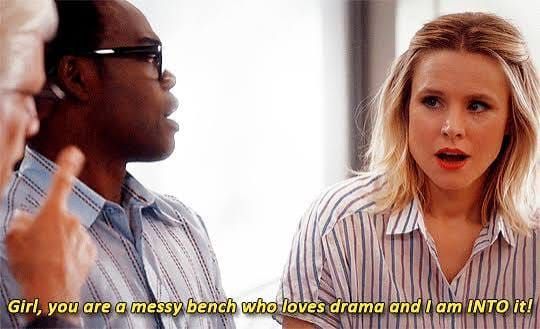
This lack of strategic forethought reinforces the previous point: Stevens is not acting strategically, out of grave concern for American democracy. To paraphrase the late, great Fake Eleanor Shellstrop, she is just a messy bench who loves drama.
Unlike Haley Stevens, Abdul El-Sayed is actually not a weak candidate
Stevens' public endorsement of Rogers is predicated on the misguided belief that there are legions of Michigan voters motivated by a profound personal loyalty to Haley Stevens. Some politicians – Bernie Sanders and Donald Trump, for instance – do hold that degree of influence over their followers. But Haley Stevens ain't Bernie Sanders, and though she is demonstrating herself to be as erratic as Trump, she has nothing like Trump's populist appeal.
"Her [Senate] campaign had essentially zero grassroots support," said Democratic communications strategist and Pod Save America co-host Dan Pfeiffer. "She couldn't hold rallies. She didn't really have a whole bunch of volunteers, couldn't raise grassroots money. She was propped up by two things: millions and millions of dollars in super PAC money from AIPAC and allies of the Senate Democratic leadership who were supporting her."
For months, we have been subjected to pundits describing Abdul El-Sayed as a "weak candidate." But ... have you seen him campaign? I'd encourage you to watch El-Sayed's full 60 Minutes interview with a combative Ross Douthat. El-Sayed is fluent – far more fluent than his interviewer – on a wide range of issues, from healthcare to antitrust to foreign policy. And, more importantly, he's able to tie those positions to a core message so popular and catchy that his opponent repeats it in his own ads: Money out of politics, money in your pockets, Medicare for All.
The fact that Abdul El-Sayed is drawing vile attacks on his racial and religious identity reveals his opponent's weakness, not El-Sayed's.
The Democratic establishment swiftly closed ranks behind Abdul El-Sayed, not Haley Stevens
I have to imagine that this is how Stevens thought this would go: she would endorse Mike Rogers, and then swarms of establishment Democrats would flock to her side. They would lock arms and stand bravely against the grave but unnamed threat (because it would be racist to name it) posed by Abdul El-Sayed. Pundits would hail her the kingmaker of Michigan politics. The Jim Clyburn of the Midwest.
But, hilariously, that is not what happened. At all.
Establishment Democrats came out of the woodwork to not just support El-Sayed but to shout from the mountaintops that they've known all along that Haley Stevens was an absolute freak. Fifteen of her congressional staffers resigned in protest. Former friends and roommates denounced her. The Michigan Democratic Party rescinded her membership and cut off her access to the voter file.
Ray Wert, husband of former Michigan Senate candidate Mallory McMorrow, unburdened himself on Twitter, saying, "I've known Haley Stevens for a long time. Until now, she has always had staff to protect her, prop her up, and keep her safe from her own irrational behavior. What we're seeing now? This is just raw, unfiltered Haley."
Even Chuck Schumer, who recruited Stevens to run in the first place, has called her actions "despicable."
Stevens' betrayal underscores a message that El-Sayed has been hammering throughout his entire campaign
Abdul El-Sayed has said from the beginning that his candidacy is a shot across the bow of both the Republican and Democratic establishments. His entire argument is that the decisions made by elected representatives in Washington are too often governed by influence-peddling and internecine squabbles – completely disconnected from the challenges faced by normal people.
Stevens' defection is another proof point in that message. If the argument for her endorsement is that it will nudge some fence-sitters toward Rogers, there's an equally compelling argument that it could push some non-ideological, anti-establishment voters toward El-Sayed. Here's a Democrat who will fight for Michiganders, even if it means butting heads with his own party.
Normally, you have to pay for advertisements like that.